

His Majesty's Pop Life: Prince Interactive
Some thoughts on a Prince-themed adventure game from 1994.

Prince is an artist that doesn’t need any introductions, but I will nevertheless attempt: he was a freakish genius, a multi-instrumentalist, a producer, and a one-man talent agency. He maintained a career that spanned four decades, cut short only because of his untimely passing in 2016. There were peaks and valleys in his popularity, like all great musicians, but he consistently managed to catapult himself back into the conversation due to his adaptability to changing landscapes. When The Revolution—the backing band that helped propel him into superstardom with Purple Rain—dissolved, he didn’t waste any time getting back into the studio by himself. He put together one of the best albums of his career, Sign “☮︎” the Times, while his personal and professional relationships were in a mercurial state. This period was so prolific that the label executives at Warner Bros. had to negotiate with Prince to cut down the length of the album; it ended up releasing as “only” a double LP instead of an absurd triple-record affair.
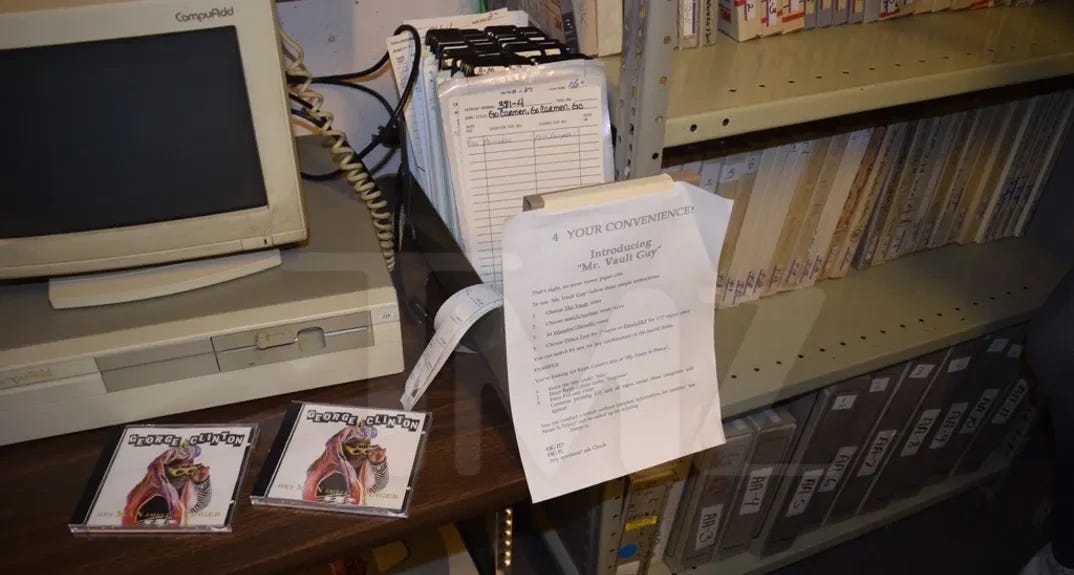
Prince’s versatility wasn’t limited to his musical talent. His headlong embrace of new technology was undoubtedly a major factor in his ability to stave off irrelevancy. He was an early adopter of the Fairlight CMI, a synthesizer that few musicians could even afford in the mid 1980s. Prince’s vault where he hoarded his vast reserves of unreleased music had a DOS-based computer cataloging system on its front end, affectionately called Mr. Vault Guy, that accounted for the contents of every tape, disc, and hard drive. He was also much earlier than most to the idea of internet distribution, stubbornly insisting on selling his triple-disc box set of non-album rarities, Crystal Ball, through his own website in 1998, to the detriment of sales potential. (A rarer edition of Crystal Ball contained his first album of orchestral arrangements and his first album of acoustic singer-songwriter ballads as fourth and fifth discs—a very Prince move to make some of his most interesting material the hardest to get your hands on.)
Given his love for the bleeding edge of progress, it only makes sense that Prince would become interested in video games. In 1994, when Prince Interactive was released, it was yet another volatile period for the artist. To set the stage a little bit: his final album with Warner, Come, was set to release in two months. He purposely refused to promote the new project as a means of spiting the label, ending his contractual obligations by cooperating as little as possible. He changed his name to an unpronounceable symbol the year before, forcing everyone to call him “The Artist Formerly Known As Prince.” The name of the game, technically, isn’t even Prince Interactive, but until the purple one’s signature glyph is properly adopted in a Unicode set we have to call it something.
Cyan’s genre-defining adventure game Myst released a year prior to Interactive, and the similarities are more than superficial. You find yourself in a fictionalized version of Prince’s home and recording studio Paisley Park, solving arcane point-and-click puzzles. Broadly, the objective is to search the mansion and assemble the scattered pieces of the musician’s eponymous symbol as if they’re fragments of the Triforce, though in practice this amounts to a flimsy excuse to poke around and uncover various Prince-related easter eggs. There are an abundance of music snippets, photos, and interviews with other musicians—Eric Clapton, George Clinton, and Miles Davis all make appearances. The game even kicks off with an exclusive song called “Interactive,” ostensibly a song about being a song in a video game. (He would pull a similar move years later with “Cybersingle,” a recursive song about the fact that you could download it from the Internet.)


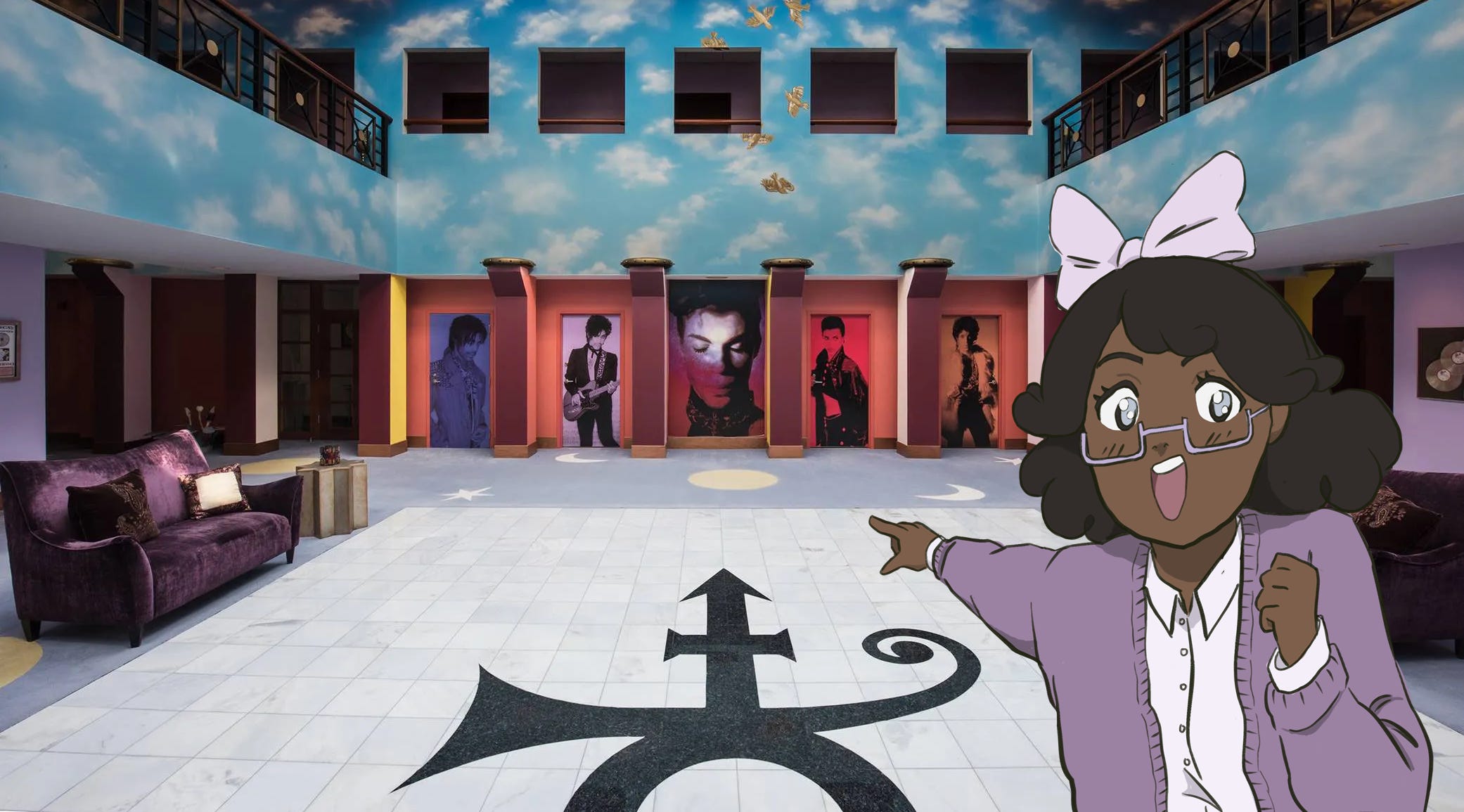
So how much input did Prince actually have in the creation of Interactive? In his own words, not much. When asked in an interview published on his official website about his role on the project, he flatly responded: “Eye had virtually nothing 2 do with it.” I’d believe that he wasn’t doing any active consulting, but Prince’s words should always be received with healthy skepticism. Parts of the digitized version of Prince’s estate are startlingly accurate, long before visitations were available to the public. Look up photos and you’ll see just how much the interior looks like an adult playground; I find it hard to believe the developers would have gotten it so right without a guided tour. There are also several then-unreleased songs that would appear on forthcoming releases (Come two months later, The Gold Experience in 1995, and Crystal Ball in 1998), which betrays a level of access.
The next year, the publisher would face stiff headwinds. Graphix Zone chief executives Charles Cortright and Angela Aber gave up their positions following a merger with another multimedia firm, leaving the new management with a mountain of debt. They reported losses of around $15 million in the preceding couple of years. Another merger was attempted with the developer Inscape, most famous for their own multimedia artist game Bad Day on the Midway featuring the eyeball-masked experimental group The Residents. The company seems to have shuttered in 1997 without finding a path to profitability, releasing an educational disc chronicling the career of Herbie Hancock as their swan song. Ultimately, Interactive wasn’t successful, nor was it especially unique; JUMP: The David Bowie Interactive CD-ROM was of similar fare and released months earlier. Graphix Zone would even outdo themselves in scope shortly after with Highway 61 Interactive, their virtual Bob Dylan museum.
What ends up being most interesting about Interactive is not necessarily how it innovates, but how it’s indicative of its time. Functionally, it does little to stand out from contemporary adventure games like Myst, Beneath a Steel Sky, or Day of the Tentacle. Historically, it acted as an important document for fans and scribes looking to document the inner workings of Prince’s operation; despite all the fantastical embellishments of his Minnesota home, like sprawling underground catacombs and staircases reaching across galaxies, this was the only way to get a somewhat accurate walkthrough of his studio. Thematically, it tells a story of Prince’s legacy as it stood in the mid ‘90s—full of references to his unassailable accomplishments, but also serving to build up hype for the second act of his career. ✿
Thanks for reading this sixteenth installment of once bitten, twice shy, purple people.
If you like the newsletter and consider it worth your while, I’d ask you to consider making a donation on Ko-fi! There’s an option for a recurring monthly donation, but even just a one-time helps a lot. Thanks so much for reading!
Paisley Park is in your heart. 💜
first